Search visibility
Every established page address stays where it is, so search rankings, bookmarks and links from other sites keep working.

Case study · Website rebuild and migration
Knockout Arcades is a business I co-own, and it had outgrown its website builder. I rebuilt the shop, moved it over, and kept everything worth keeping: the page addresses search engines know, 77 product photos and 22 customer reviews.
Whose site this is. Knockout Arcades is the flat-pack arcade cabinet brand of Dust Shack, the manufacturing business I co-own in North Wales. It has been selling kits since 2020. Being one of the owners meant I knew the products, the customers and the order process first-hand. Decisions were still agreed with the other owners rather than made alone. And the result had to work: this is a live shop with real customers and real orders, not a demonstration.
The starting point
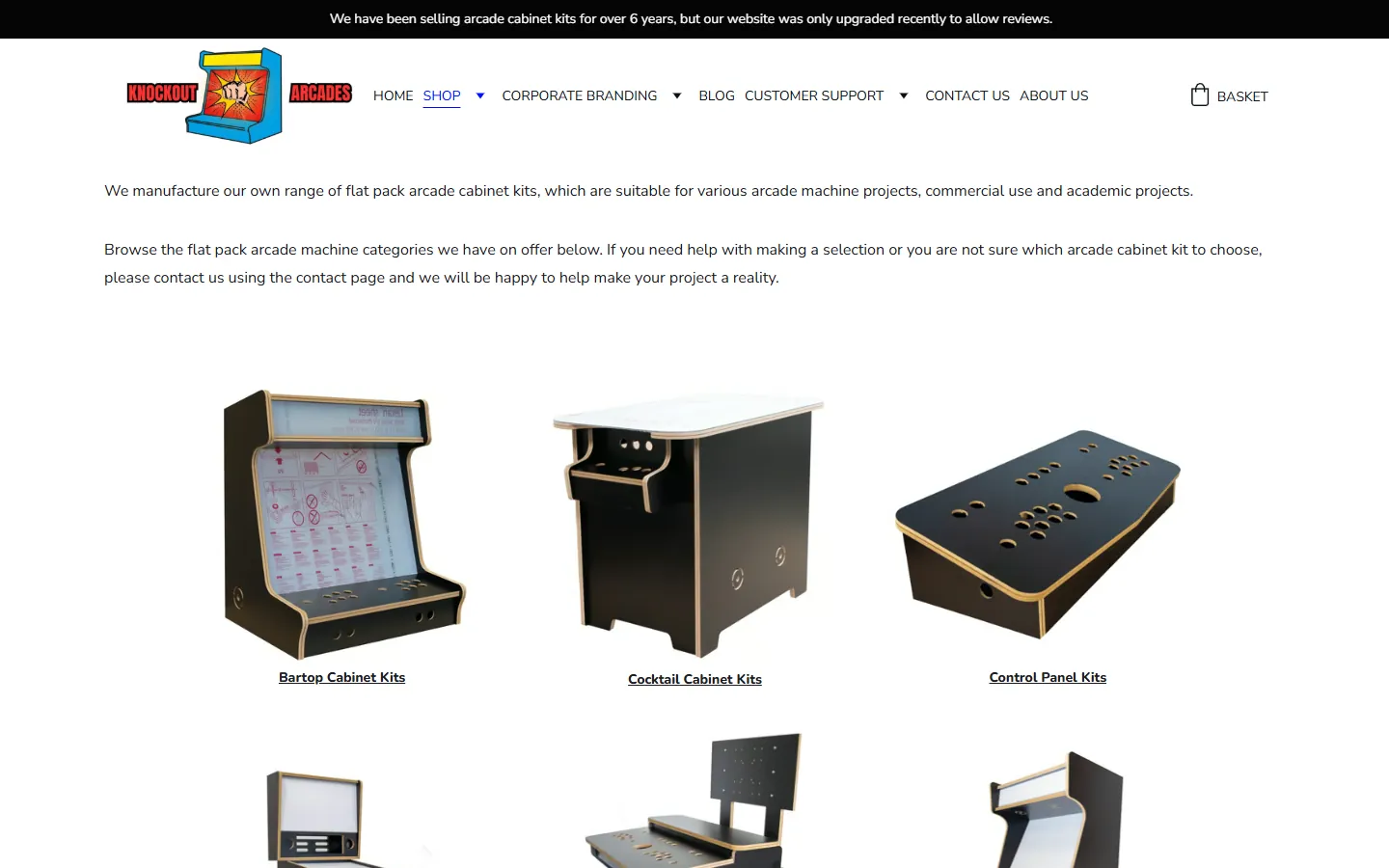
The original site was built by hand in Hostinger’s website builder. It got the shop online, with product pages, a basket and checkout through Hostinger Ecommerce. As the range and the business changed, the builder held the shop back.
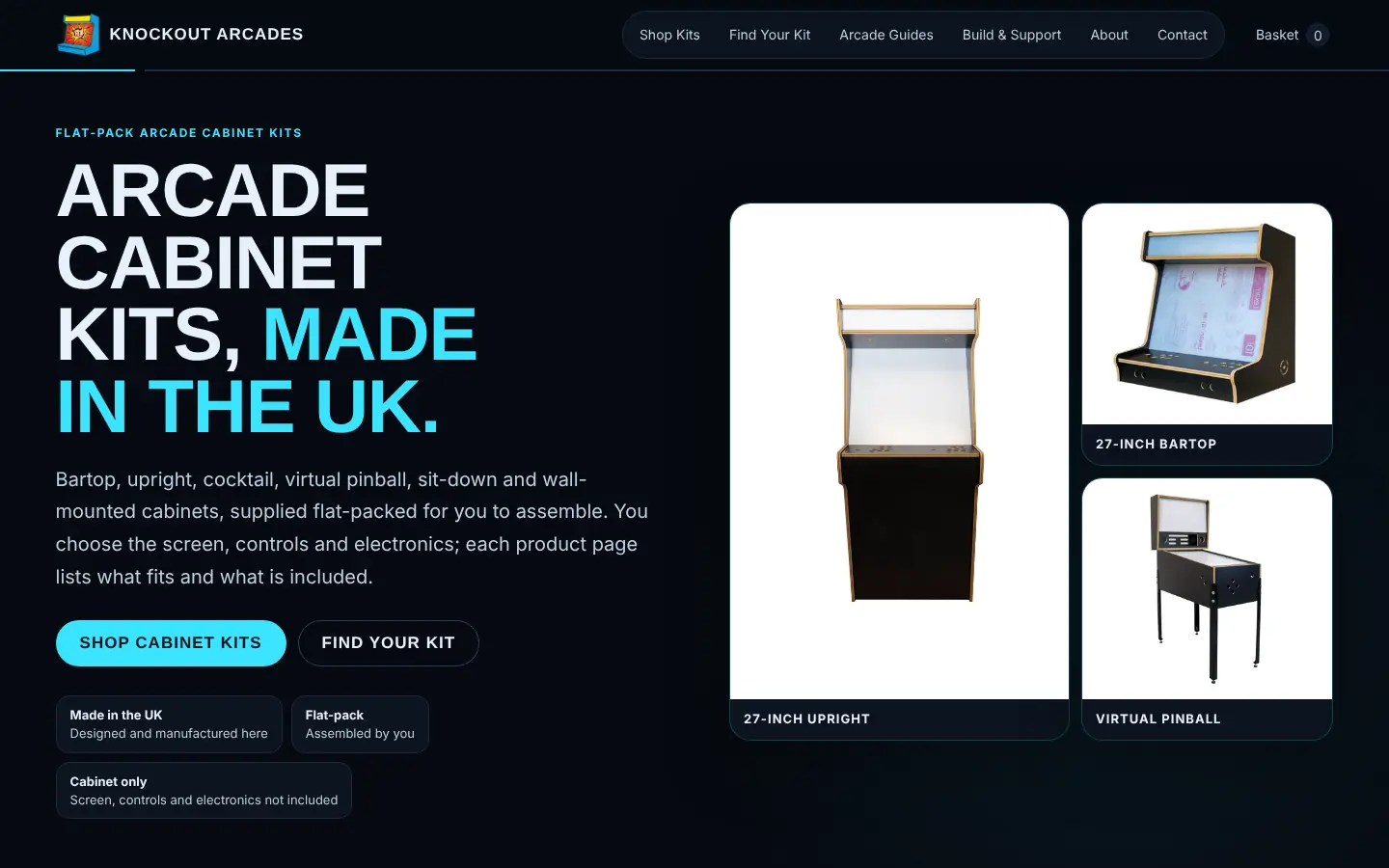
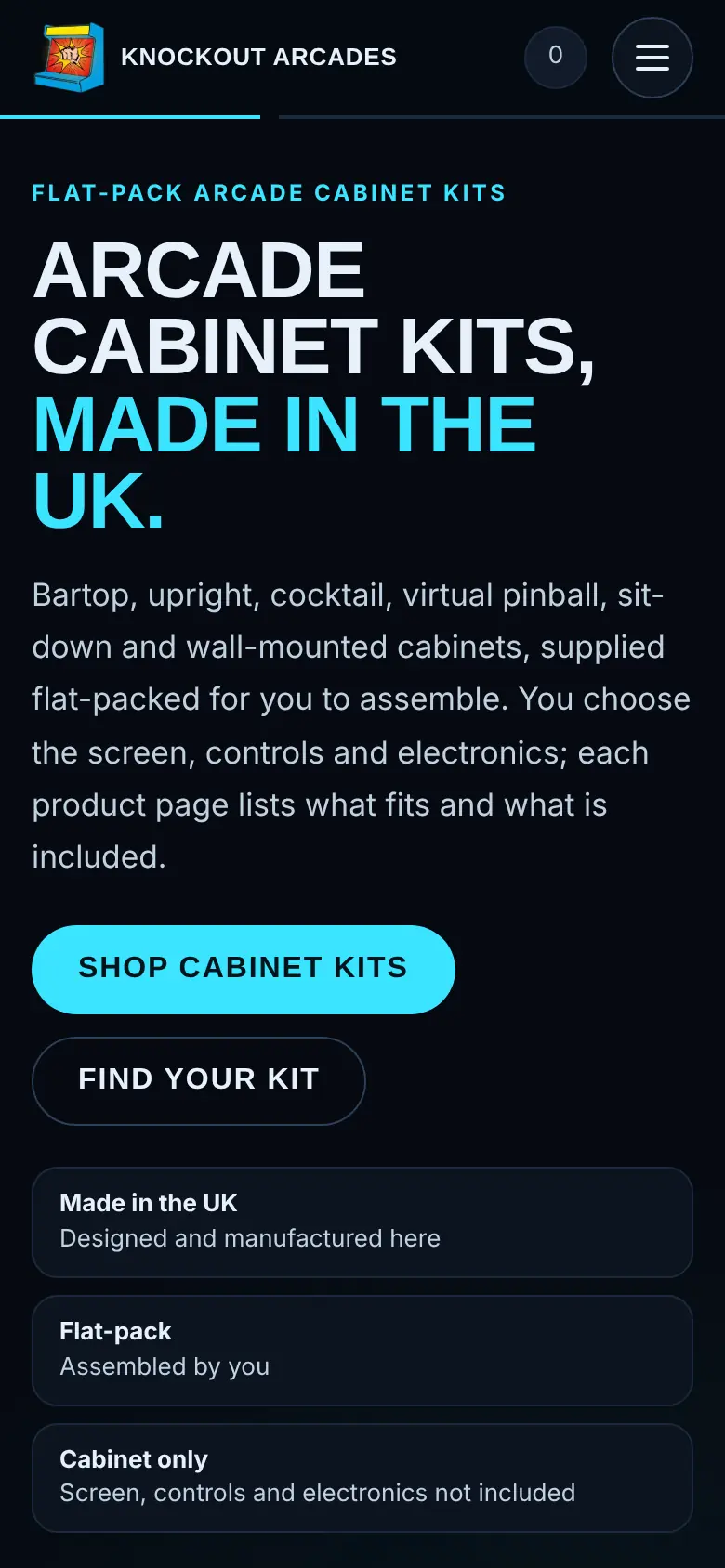
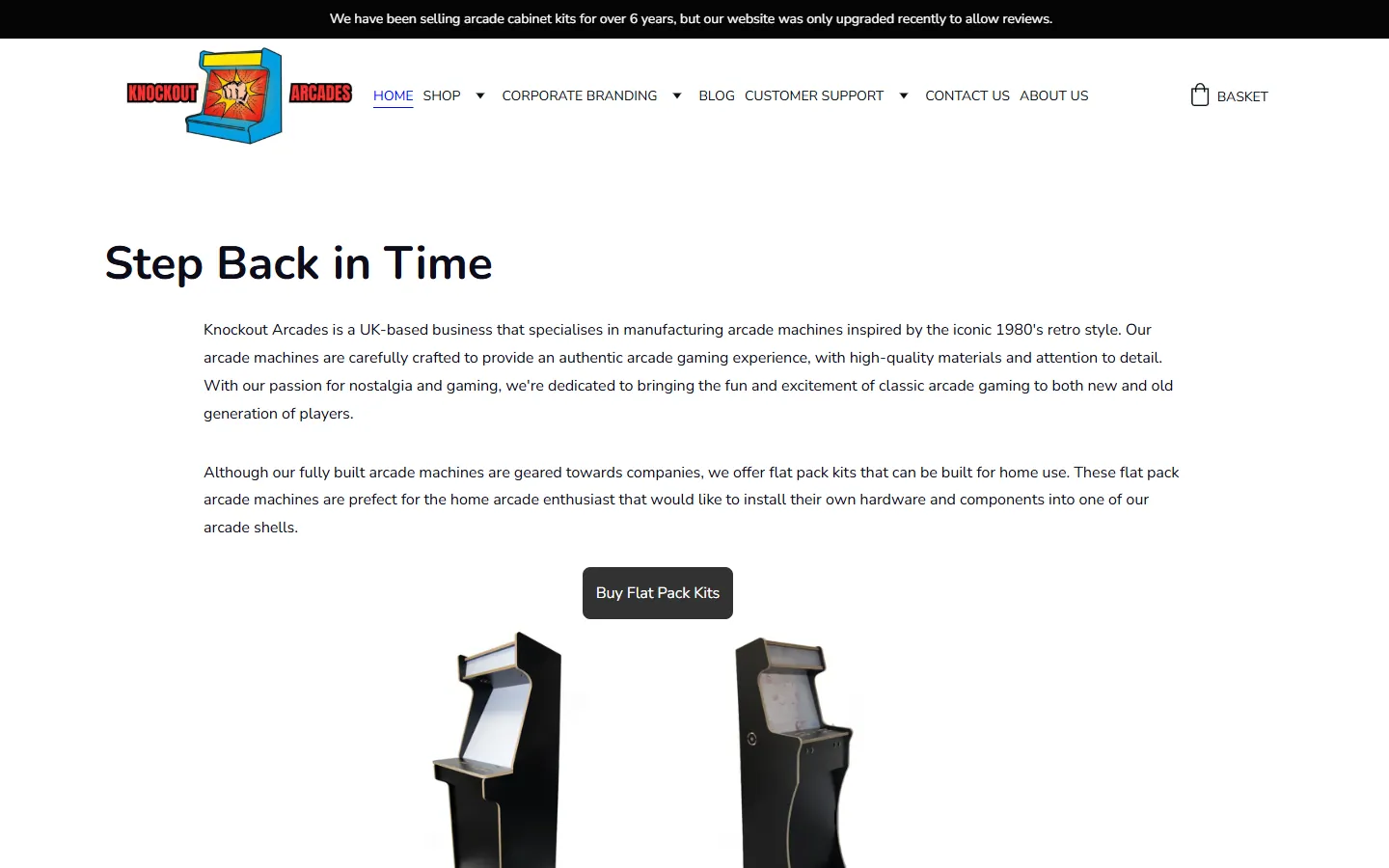 BeforeAfter
The brief
What you keep matters as much as what you add. Before any design work, we agreed what the new site had to protect.
Every established page address stays where it is, so search rankings, bookmarks and links from other sites keep working.
Prices, stock, product options, payments and orders stay in Hostinger Ecommerce. Day-to-day running doesn’t change.
Customers still see each kit from every angle, alongside the reviews earlier buyers left.
The kits are original designs. Nothing on the new site gives away how they’re made.
The migration
I went through all 51 addresses in the live sitemap and recorded what each page held: products, ranges, guides, support and policy pages.
45 pages kept their exact address. A retired white kit now points to its black equivalent. Pages for products and services we no longer offer were retired properly, so search engines drop them rather than finding broken links or being sent to the homepage.
The new shop was built and reviewed on a separate address while the old one kept taking orders. Automated checks covered every address, link, product photo and specification each time something changed.
Before the switch, I ran orders through the whole checkout, first in test mode and then with a real payment. I checked the order emails, the return to the shop, and the fulfilment and refund steps.
The domain moved to the new site on 10 October 2026. The old builder site was kept as a fallback for the first few weeks rather than deleted on the day.
Launch day
The domain moved to the new site on 10 October 2026, with the old shop trading right up to the switch.
Going live is also the time to tell customers. The reel announcing the new site uses the assembly renders made for the product pages and footage from the workshop, so the same work did two jobs.
What changed
Buying a flat-pack arcade cabinet means checking that your screen, controls and space will work. The new site answers those questions before they become emails.
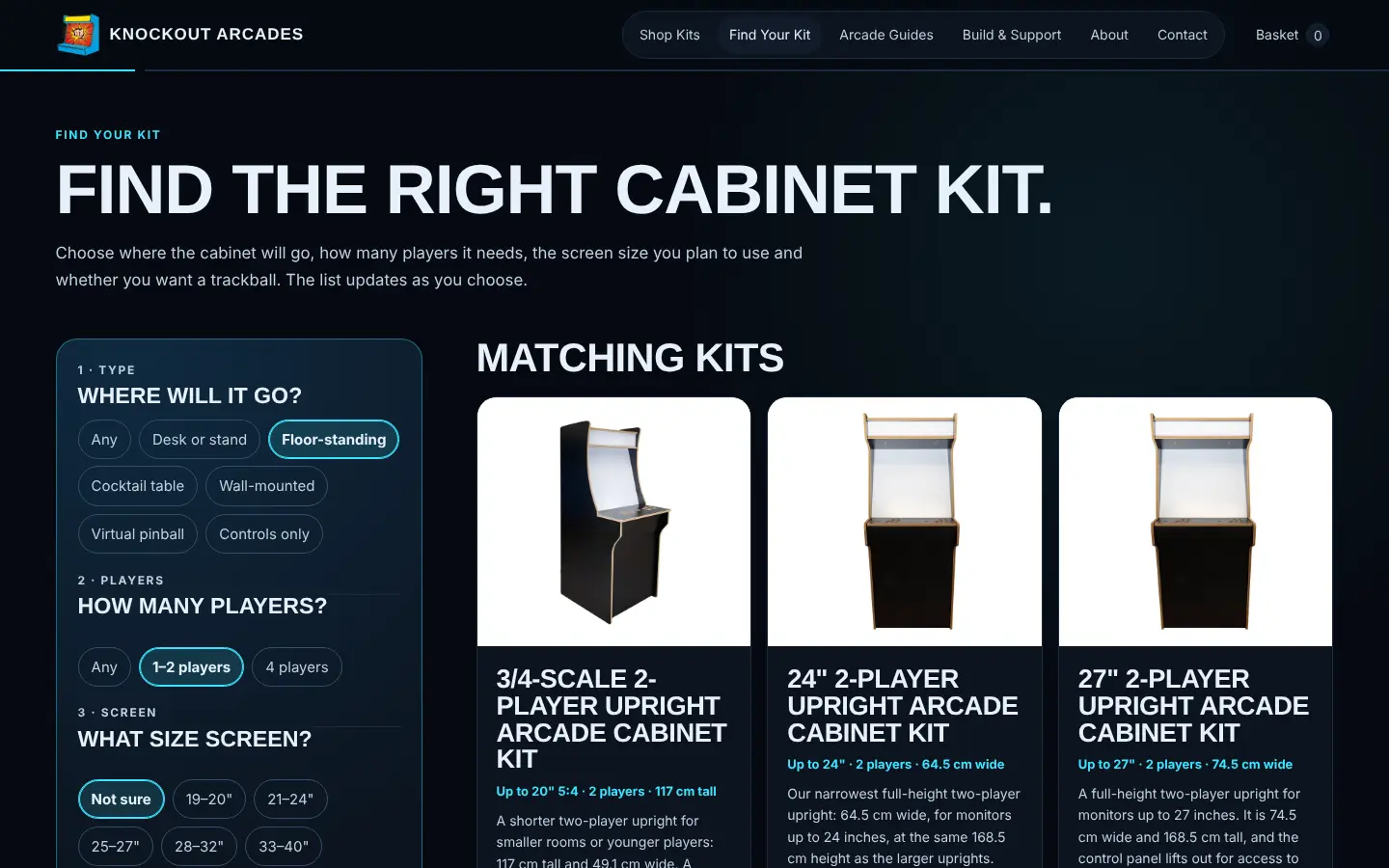
The old shop page listed seven ranges and suggested getting in touch if you weren’t sure. Find Your Kit now asks four questions: where the cabinet will go, how many players, what size screen and whether you want a trackball. The list of 17 kits narrows as you answer.
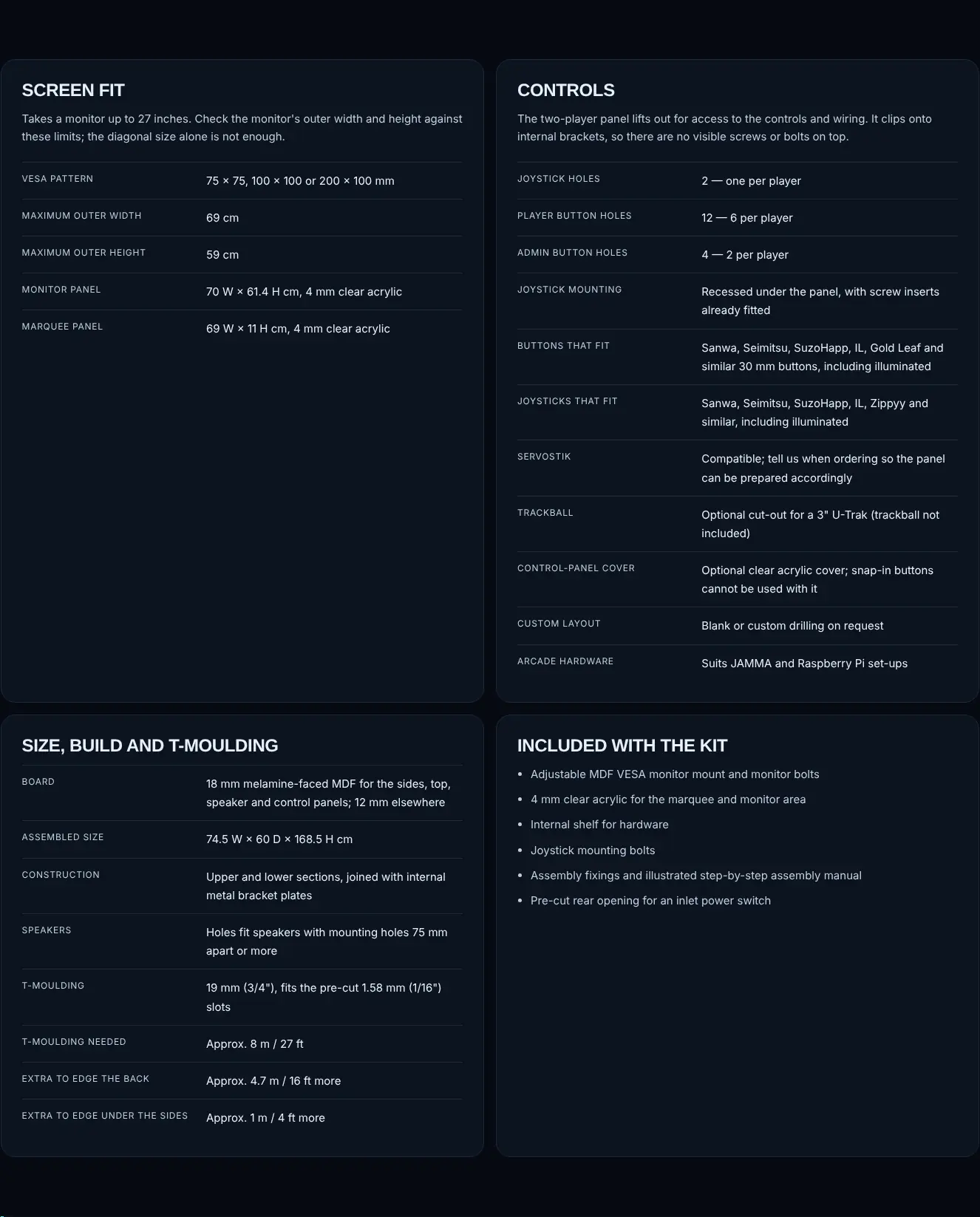
Every kit page now sets out its specifications in the same four cards, in the same order: screen fit, controls, size and build, and what’s in the box. A customer can check that their monitor, joysticks and buttons will fit before they order, whichever kit they land on.
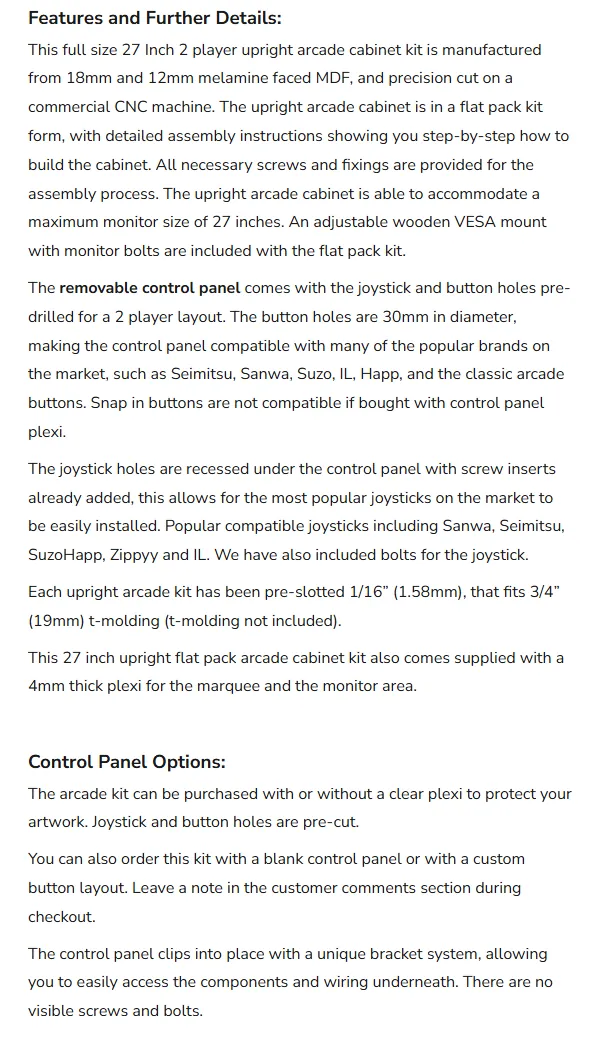
New
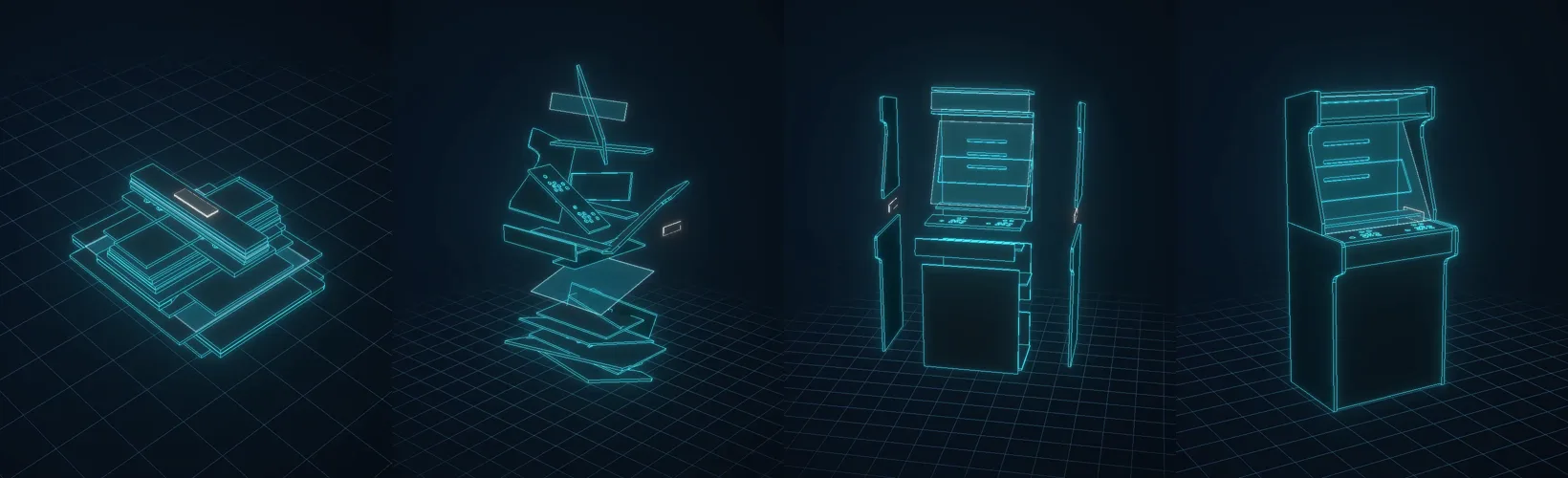
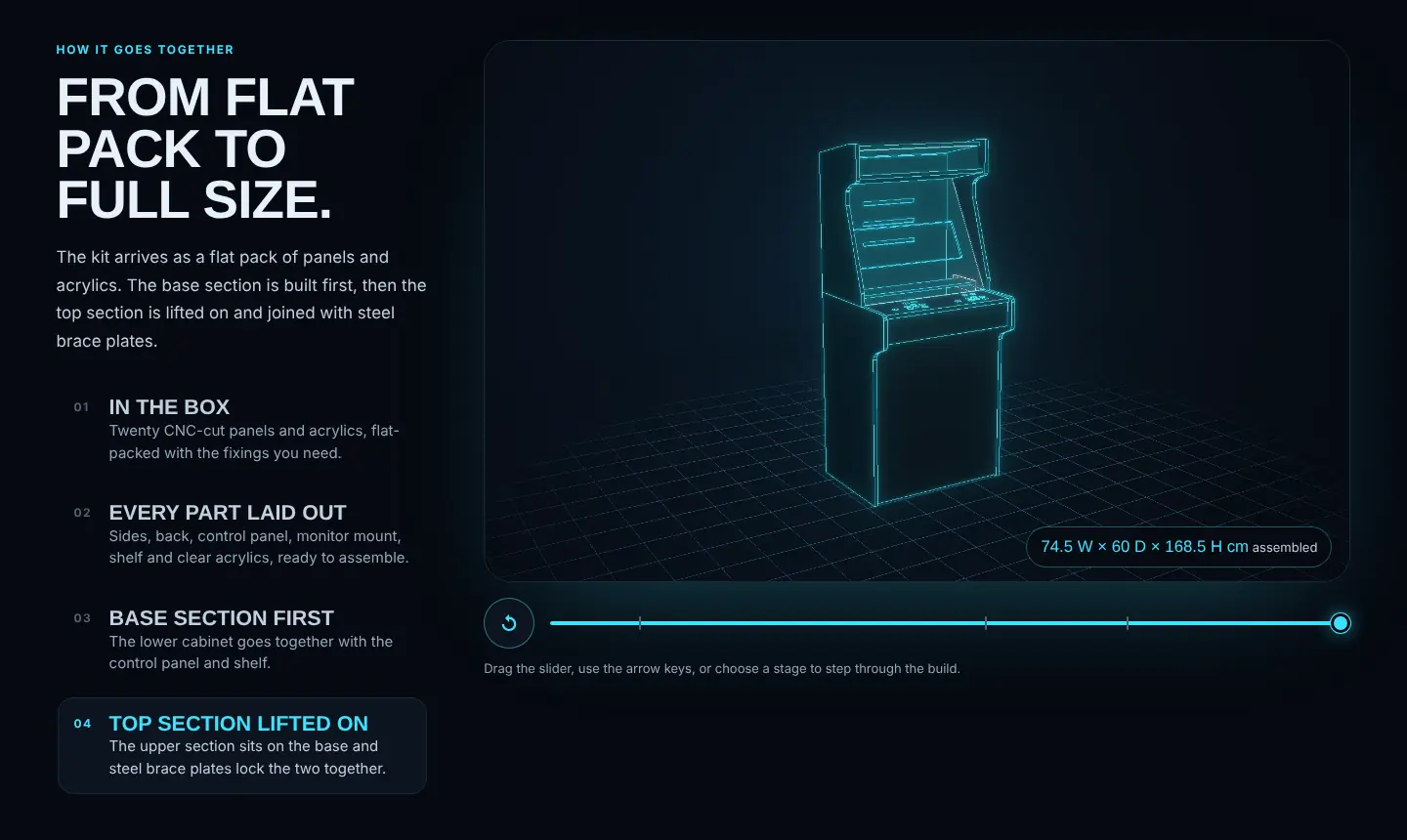
The assembly section on the kit pages is a 3D model of the cabinet that goes from a flat pack of panels to the full-size cabinet as you move a slider, with the assembled dimensions alongside.
I built it from our own design models and rendered it as glowing outlines, delivered as short video and still images. The models themselves never reach a visitor’s browser, so the designs stay private. The same render opens the launch reel.
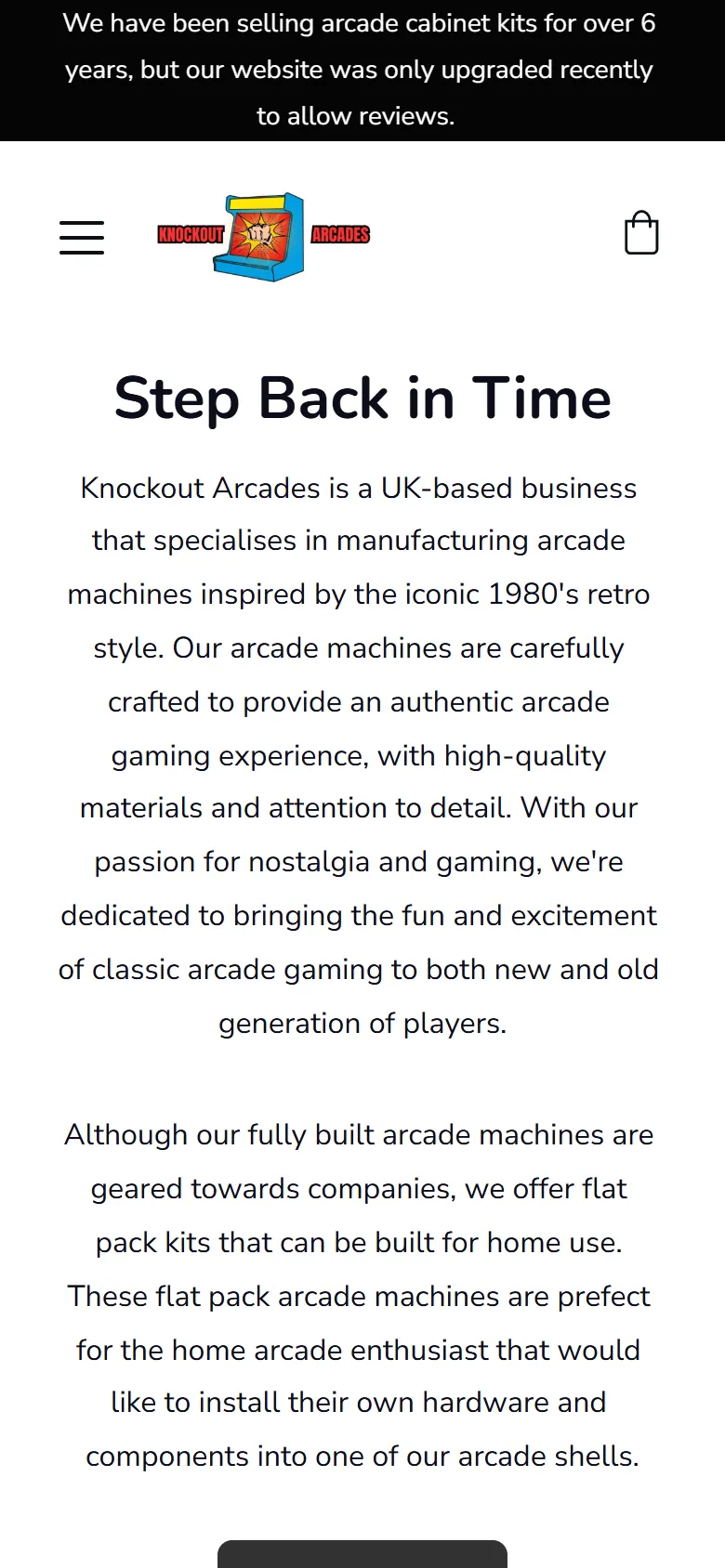
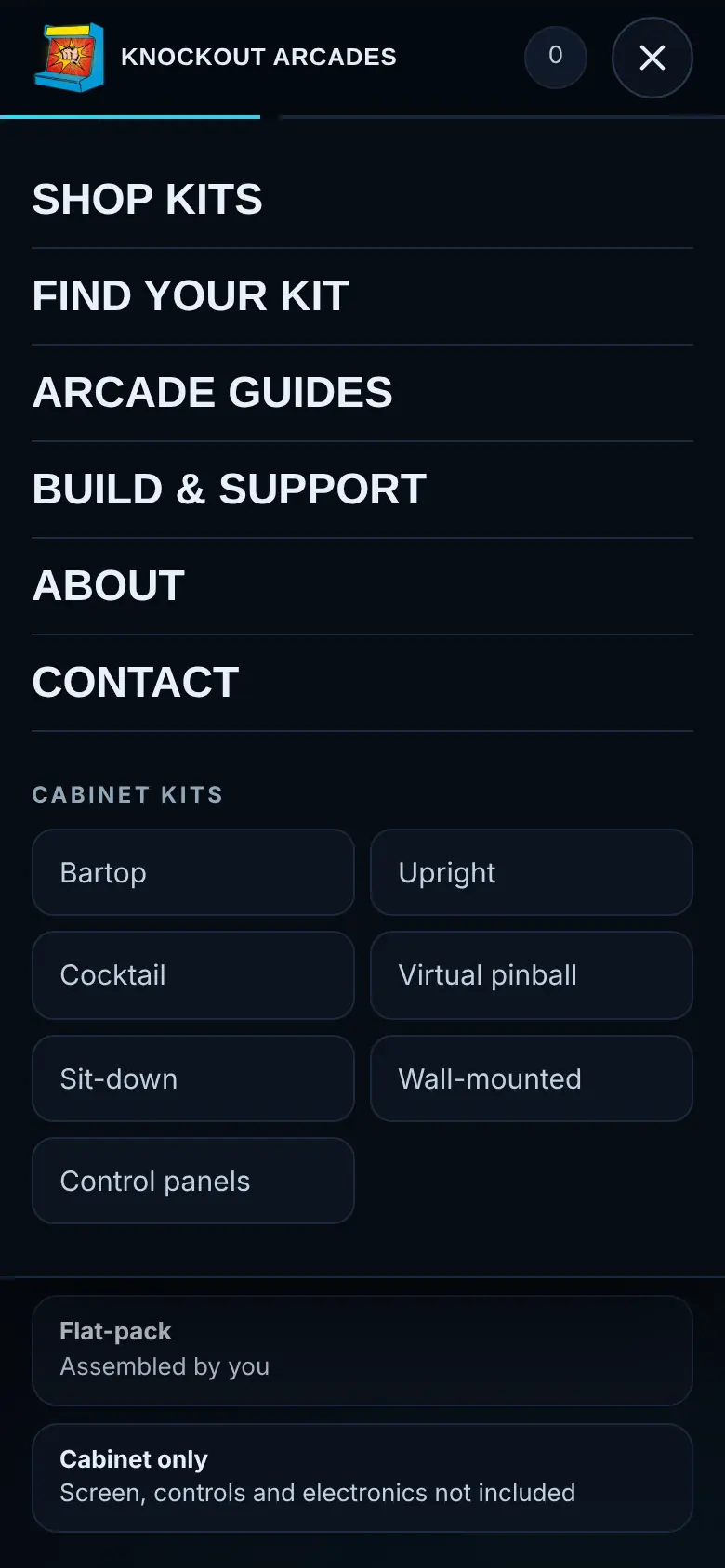
On a phone, the old homepage opened with an announcement bar and a paragraph of text. The new one opens with what the shop sells and two clear next steps. Navigation, the finder, product galleries and the basket were all designed and checked at phone size.
The details
On a phone, the homepage now downloads about 159 KB when it opens, down from around 2.7 MB. A product page fell from 3.8 MB to 170 KB. The full-size photos are still a tap away.
Lead times and delivery areas appear on every product, with a clear notice for Northern Ireland in the basket and checkout.
Customer reviews appear on the product they’re about, with the average rating, and the latest on the homepage.
Products, reviews and guides are described in a format search engines understand, with an up-to-date sitemap.
The build guides were rewritten with clearer titles, and new diagrams were drawn for them.
Analytics only load after a visitor accepts. Keyboard focus is visible, and motion is reduced for anyone who prefers it.
At a glance
| Before | After | |
|---|---|---|
| Platform | Hostinger’s website builder | A custom-built shop, designed around the range |
| Choosing a kit | Browse each range, or get in touch | Find Your Kit narrows 17 kits by space, players, screen and trackball |
| Specifications | Long paragraphs and lists | The same four cards on every kit |
| Product range | Retired kits and services still listed | Current range only, with retired pages handled properly |
| Page addresses | 51 in the sitemap | All 51 accounted for; 45 unchanged |
| Homepage on a phone | About 2.7 MB from 51 files | About 159 KB from 13 files |
| Store, payments and orders | Hostinger Ecommerce | Hostinger Ecommerce, unchanged |
Page sizes were measured on 11 October 2026 in Chrome, with the cache cleared, on each page’s first load before any scrolling. The “before” figures come from the original builder site, measured before it was retired.
Under the bonnet
If you’re on a website builder or an older site that no longer fits, I can plan the move, keep what already works and build what’s missing.